Open 6:30am–6:30pm, seven days a week Doctors 8:00am–6:00pm · Walk-ins welcome, with a possible wait · (727) 738-2273

Home › Services

Orthopedic surgery for dogs and cats

A veterinary orthopedic surgeon operates in our own surgical suite. Your pet has the procedure at a hospital it knows, is looked after by our own team, and in most cases goes home the same day.

What orthopedic surgery is done here?

For dogs and cats. This is a partial list; if your vet has named something that isn’t here, ask. Total hip replacement is not done here, and if that’s what your pet needs we’ll tell you where to go.

Cruciate ligament repair: TPLO and lateral suture

The most common orthopedic problem in dogs, often described as a torn knee or torn ACL. A TPLO changes the angle of the top of the shin bone so the joint no longer depends on the ligament; a lateral suture stabilizes the joint from the outside. The surgeon decides which suits your dog after reviewing the x-rays.

Luxating patella

A kneecap that slips out of its groove, in one knee or both. Where the groove is too shallow, it is deepened as part of the repair.

Femoral head ostectomy (FHO)

For a painful hip that can’t be repaired, the head of the femur is removed and the joint rebuilds itself in soft tissue.

Fracture and trauma repair

Broken legs, plated or pinned; jaw fractures; pelvic injuries, including the separation that often follows a road accident.

Elbow dysplasia

Removing the fragments that cause it and, where the bone shape is the problem, a corrective procedure on the ulna.

Hip injections, amputation and implant removal

Joint injections for the hip; limb and single-toe amputation; removal of plates, pins or screws that are causing a problem.

Real cases, before and after

Patients treated at our hospitals. Identifying details removed.

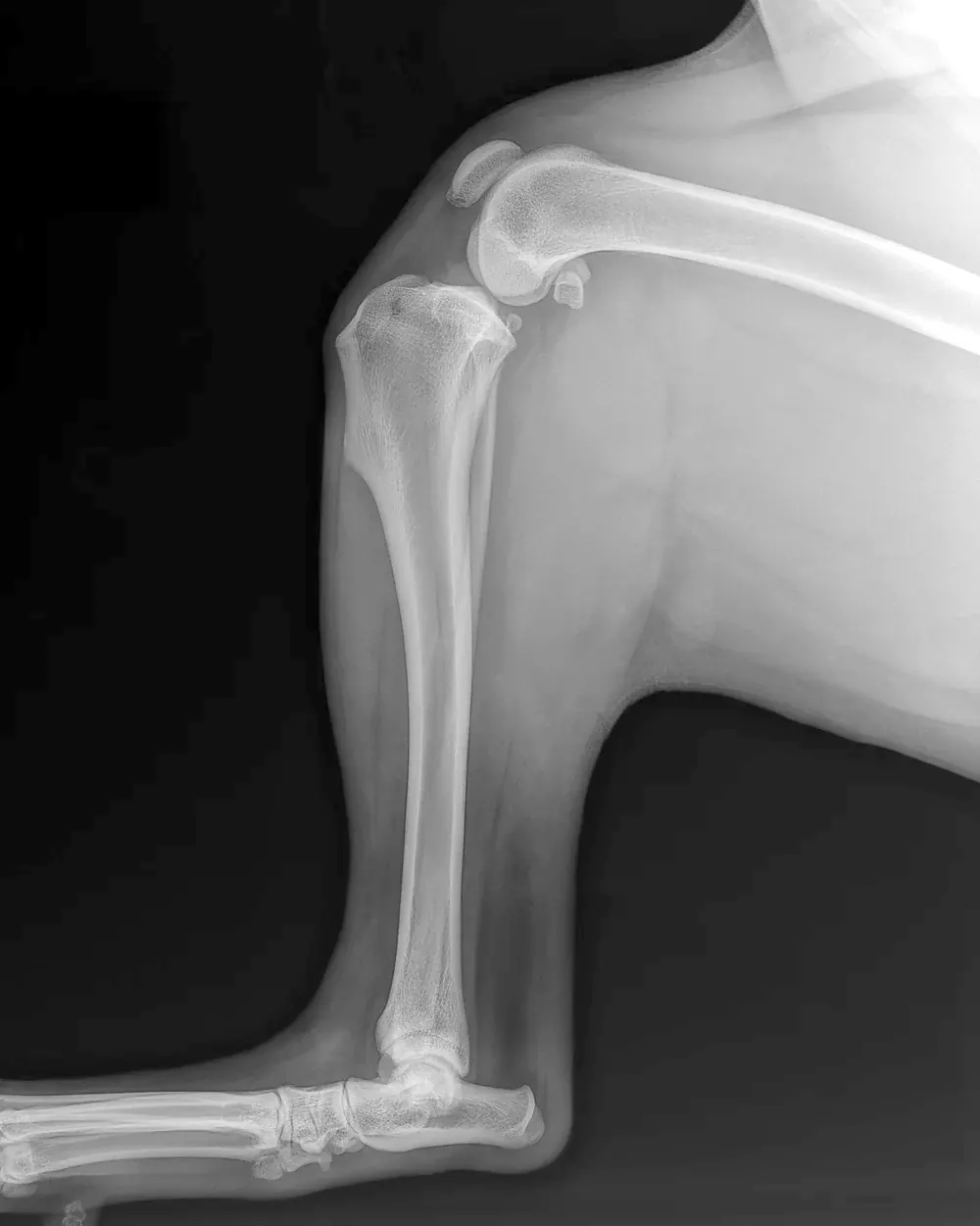
X-ray of a dog’s knee before TPLO
TPLO, before: a dog’s knee with a partly torn cruciate ligament.
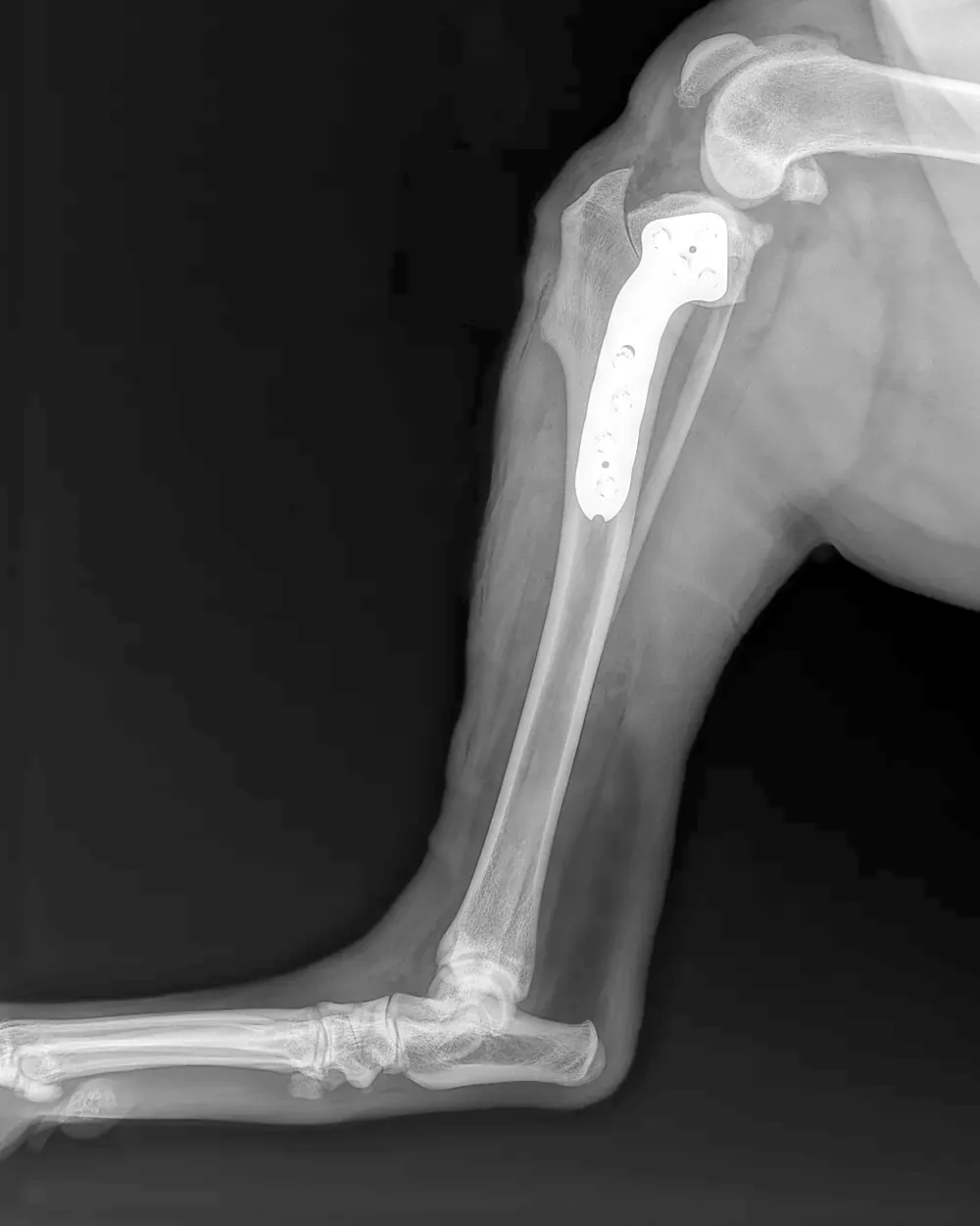
X-ray after TPLO with plate and screws
After: the top of the shin bone re-angled and held with a plate and screws.
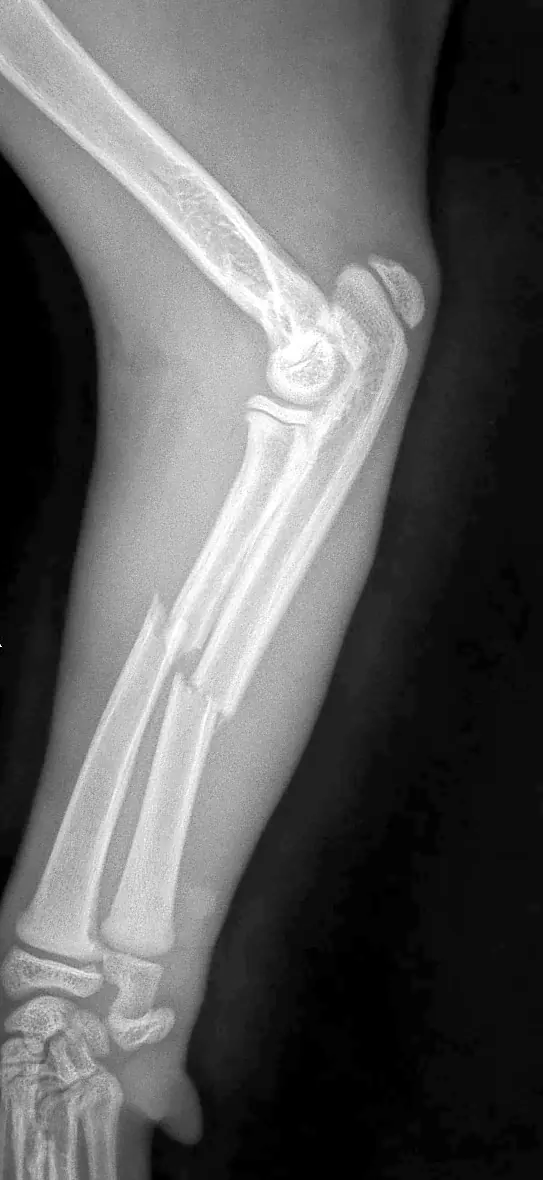
X-ray of a cat’s broken foreleg
A 4.8-pound cat with both forearm bones broken near the wrist.
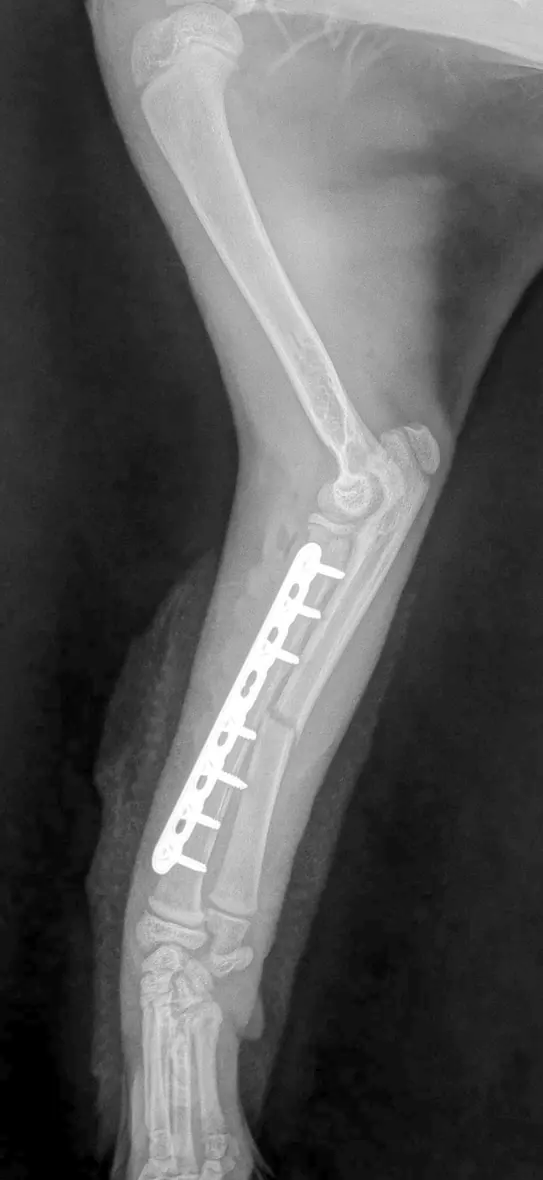
X-ray after fracture repair with a plate
After: the radius realigned and held with a plate and screws.

How does it work?

Most people reach us having been told their pet needs surgery, with no x-rays yet. So the first step is usually imaging, on our own digital x-ray equipment. The orthopedic surgeon reviews the films, and we come back to you with a written estimate and a surgery date. If your own vet already has x-rays, we can work from those.

The surgeon brings their own instruments and assisting staff and operates in our surgical suite. Our team looks after your pet before and after. Questions about the surgery itself are answered by the orthopedic surgeon, usually through one of our own doctors, who knows your pet’s history.

Why is there no price on this page?

Because there is no single number. A TPLO that takes forty-five minutes and one that takes ninety are different operations to run, and what a fracture needs isn’t fully known until it’s imaged. You receive a written, itemized estimate for all proposed diagnostics and treatment before any work begins, and nothing is scheduled until you’ve said yes.

Going home

We don’t provide overnight care. Most pets go home the same day with written aftercare instructions, and afterward you call us, seven days a week. If overnight monitoring is needed, we say so and refer you to a 24-hour hospital.

Getting on the schedule

Surgery is scheduled around the surgeon’s availability, and dates fill. The sooner we have records and imaging, the sooner we can give you a date. No referral is needed.
Paying for it

Many of our clients find that financing part or all of the procedure through Cherry works best for them. According to Cherry, the application takes under 35 seconds from start to finish, and “Cherry performs a soft credit check which does not affect your credit score.”

We also accept CareCredit and Scratch Pay, and cash, cards and checks at the counter.

Questions we get a lot

How long does a dog take to recover from a TPLO?

Most dogs put weight on the leg within a few days and are back to normal activity in a few months. In between, activity is restricted: leash walks only at first, no stairs and no jumping, then a gradual return. The restriction protects the repair while the bone heals.

Will my dog need the other knee done?

Often, eventually. Whatever predisposed the first knee usually applies to the second. Both knees can be repaired, and we’ll tell you if we think the second one is coming.

Does the plate stay in?

Yes, for a TPLO and most fracture repairs. If hardware causes a problem later, removing it is a smaller procedure than placing it.

Can you operate if my pet is overweight?

Usually yes, and weight is part of the conversation because it changes the surgery and the recovery. If there’s time before surgery, losing some weight is one of the few things you can do yourself that helps.

Request an orthopedic consultation

Tell us what your veterinarian has told you and who has any x-rays. We’ll get back to you with the next step.

About your pet
New or existing client? *
Reason for visit *Tick all that apply.
About you
How should we reach you? *
When you’d like to come in

Prefer to talk now? Call (727) 738-2273 — we’re open 6:30am–6:30pm, seven days a week.

Call usBook